I was recently digitising some old family photographs when I paused over an image I’d seen many times before. I suspected it showed my great‑great‑grandfather, John Gale Hellyer (sometimes spelt Hellier), but I wanted to be sure it was him and to ascertain when it might have been taken.
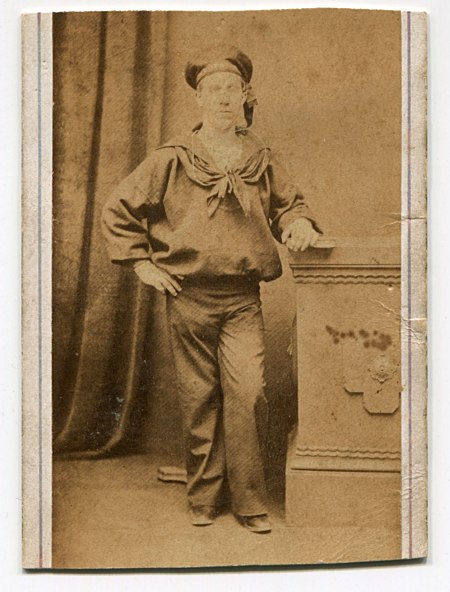
Photograph of John Gale Hellyer from the Family Collection
John was born in Tavistock, Devon, in about 1844 and served as a stoker in the Royal Navy. His service records trace his movements from ship to ship and so I began looking for clues. On his cap I could just make out the letters “OPA”, which immediately suggested HMS Topaze, the vessel he served on between 18th February 1866 and 1st September 1869. HMS Topaze was a wooden screw frigate, a sailing warship fitted with a steam engine. As a stoker, John would have worked deep in the ship’s engine room, shovelling coal into the boilers to keep the engines running whenever steam power was needed.
Another clue came from the backstamp on the photograph: “C. Baldwin y Ca., Fotógrafos, Calle de San Juan de Dios Nº95, Valparaíso”. This imprint matches the documented marks used by the Baldwin studio in Valparaíso during the 1860s, placing the photograph firmly within the period when Topaze was stationed there.
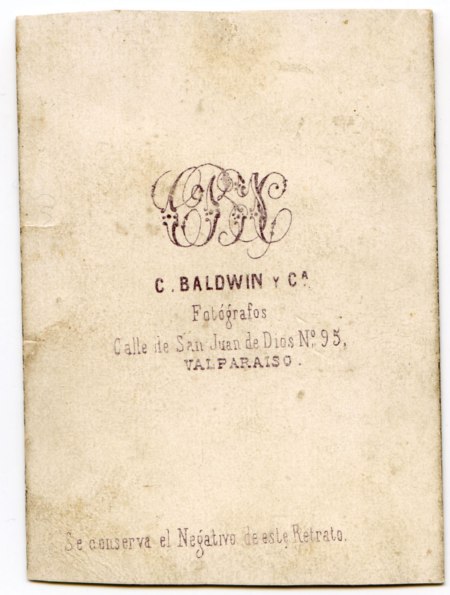
Backstamp on the reverse of the photograph
Realising my photograph captured him during those years opened up a much larger story – one that connected my ancestor, not only to a ship and a crew, but to one of the most remarkable episodes in the history of Rapu Nui (otherwise known as Easter Island) and the British Museum.
A Remarkable Photographic Archive
Photographs from the voyage survive today in a very rare collection known as the Photographic Album of H.M.S. Topaze: South Pacific 1866–69, which can be explored online by clicking here. Only two copies of the album are known to exist, and the one I’ve used comes from the National Library of Peru. It contains original photographs taken during the ship’s commission – images of the places the crew visited, from the Marquesas and Tahiti to Lima, Valparaíso, Santiago and, most famously, Easter Island. Among its pages are scenes documenting major events such as the aftermath of the devastating 1868 earthquake in Arica and Arequipa.
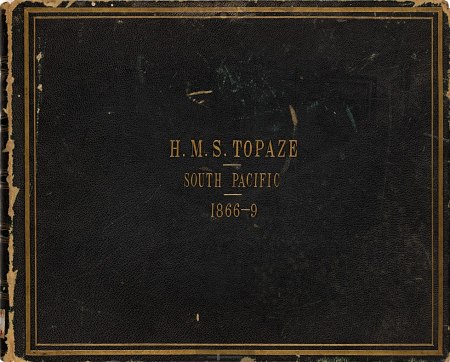
Photographic Album of H.M.S. Topaze: South Pacific 1866–69
Setting Out From Plymouth
In January 1866, HMS Topaze lay moored in the Hamoaze, the tidal estuary of the River Tamar adjacent to Devonport Dockyard, Plymouth, awaiting the long journey ahead.
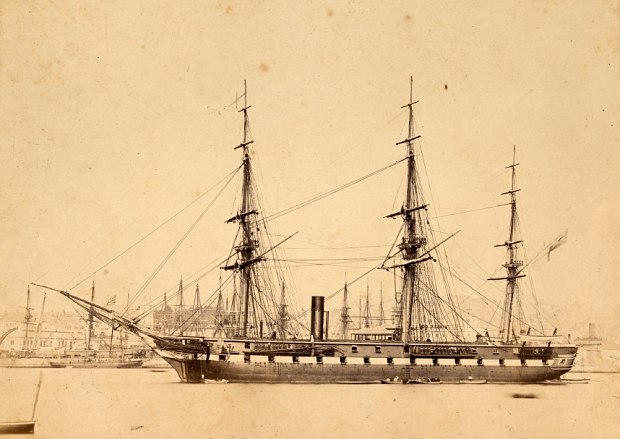
HMS Topaze. 31 guns. Commodore Powell CB in Hamoaze. Jany 1866.
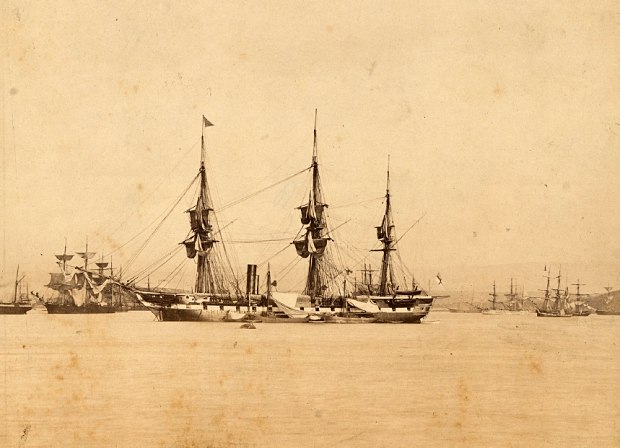
HMS Topaze embarking powder & shell preparatory to sailing for South Pacific. 1866. Plymouth Sound.
Although the photograph of the ship in Plymouth Sound doesn’t show the men at work, the original caption hints at the activity taking place on board as the ship prepared for her deployment.
Across The World To Chile
From these early scenes in Plymouth, Topaze began her commission on the Pacific Station – a posting that would take her thousands of miles from home. By late 1866 she had reached Valparaíso, Chile, the headquarters of the station, and the album includes several photographs taken there. Knowing John was on board during these moments makes each image feel like a small window into his world.
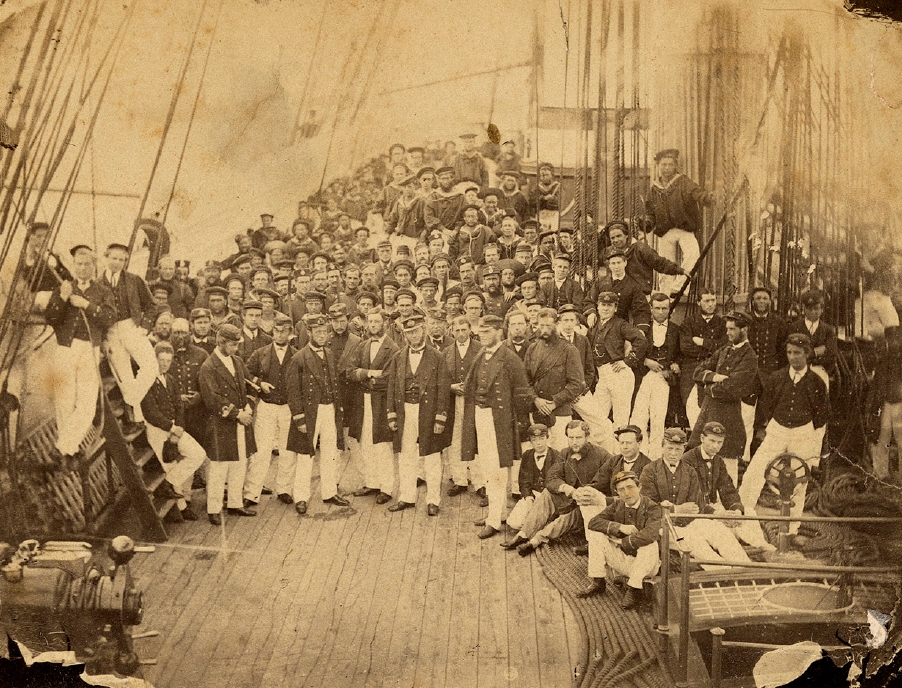
Officers and Men. HMS Topaze. Valparaíso. 1866
(Click to enlarge)
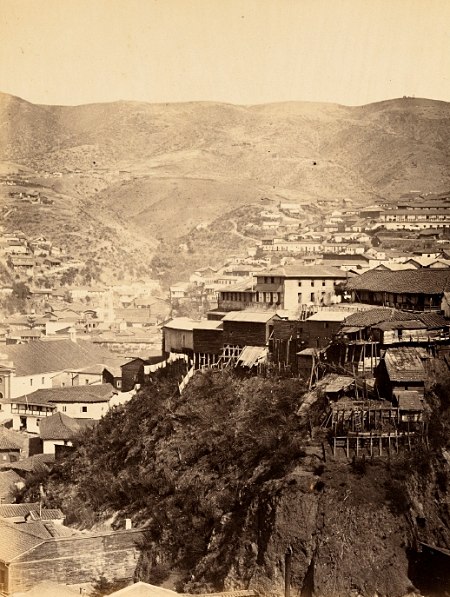
Valparaíso, Chile
Easter Island And The Removal Of The Statue
In November 1868, Topaze visited Easter Island. The crew came across a partially buried basalt statue at the ceremonial village of Orongo. This figure, later named Hoa Hakananai‘a (meaning lost or stolen friend), was unlike the larger tuff statues seen along the island’s coast. It carried intricate petroglyphs and had deep cultural significance.
The crew excavated the statue, hauled it to the shore on a sledge, and brought it aboard ship on a raft. It must have been an extraordinary sight for John and his shipmates.
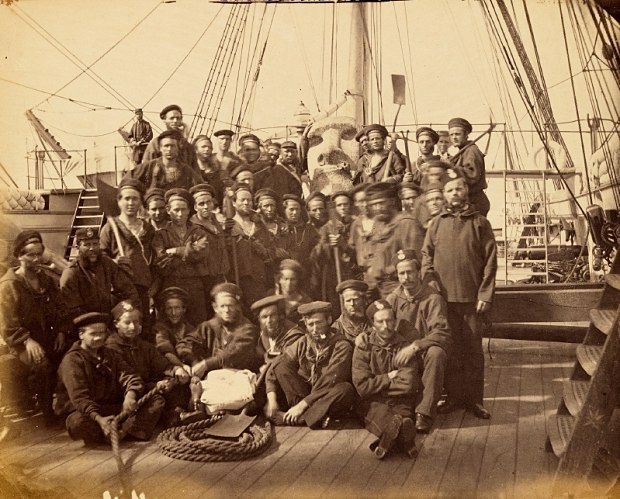
The crew of HMS Topaze posing with the Hoa Hakananai’a statue from Easter Island
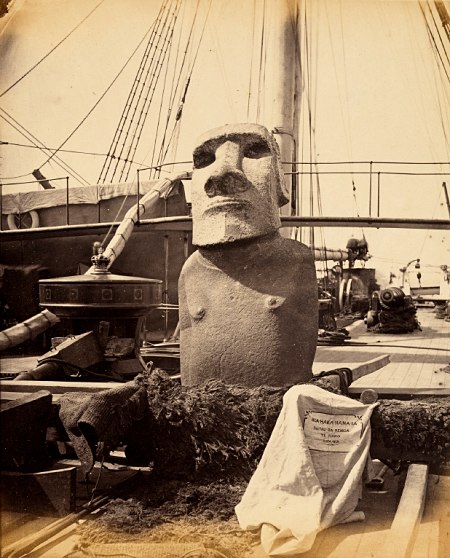
The idol Hoa-haka-nan-ai brought to England from Easter Island by the “Topaze” and presented to the British Museum
The Voyage Home
HMS Topaze continued her service on the Pacific Station before returning to Britain, arriving in Plymouth on 16th August 1869. The statue, together with a second smaller one named Moai Hava, travelled with the ship. Hoa Hakananai‘a was presented to Queen Victoria, before being transferred to the British Museum. Its current location is in the Wellcome Trust Gallery (Room 24: Living and Dying). Moai Hava was donated directly to the Museum by the Admiralty but is generally not on public display.
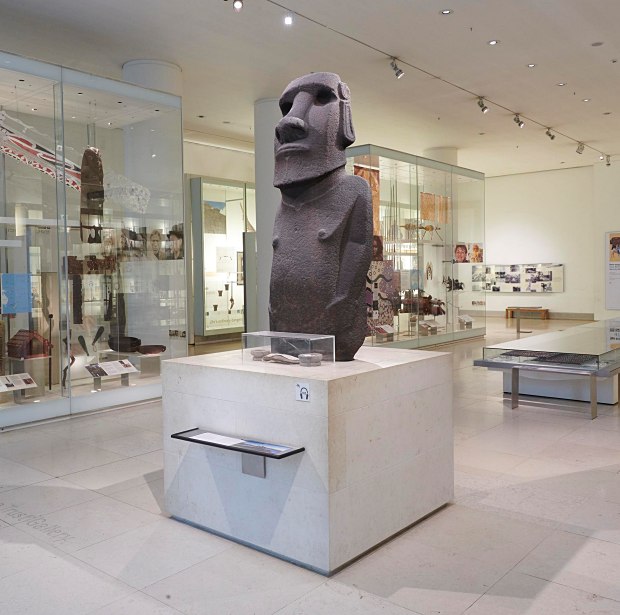
The Hoa Hakananaiʻa figure in the British Museum
© The Trustees of the British Museum.
How The Removal Is Viewed Today
Today, many people of Rapa Nui (Easter Island) regard the removal of Hoa Hakananai‘a as a profound loss. The statue is considered an ancestor, a being with spiritual presence, rather than an artwork. In recent years, Rapa Nui representatives have formally requested its return, describing the statue as a “living being” taken without consent. Discussions between Rapa Nui authorities and the British Museum are ongoing.
Closing Reflections
Researching John Hellyer’s story has reminded me how family history often unfolds in unexpected ways. A single photograph led me from a name in a service record, to a voyage to the Pacific, to an album preserved on the other side of the world and to a moment that still resonates deeply with the people of Rapa Nui today. I’m grateful for the chance to piece together even a small part of his life and to share the journey with anyone who finds these stories as compelling as I do.
You can read more about John, beyond this voyage, on his dedicated page in my family tree: https://www.hibbitt.org.uk/familytree/fam1847.html
—————————
Photograph of John Hellyer: Annie’s Family Archive.
HMS Topaze Album images: Álbum fotográfico de H. M. S. Topaze : South Pacific 1866-9
Source: Fuente BNP Digital / Biblioteca Nacional del Perú (BNP Digital / National Library of Peru).
British Museum Photograph: © The Trustees of the British Museum.
Shared under a Creative Commons Attribution-NonCommercial-ShareAlike 4.0 International (CC BY-NC-SA 4.0) licence.